

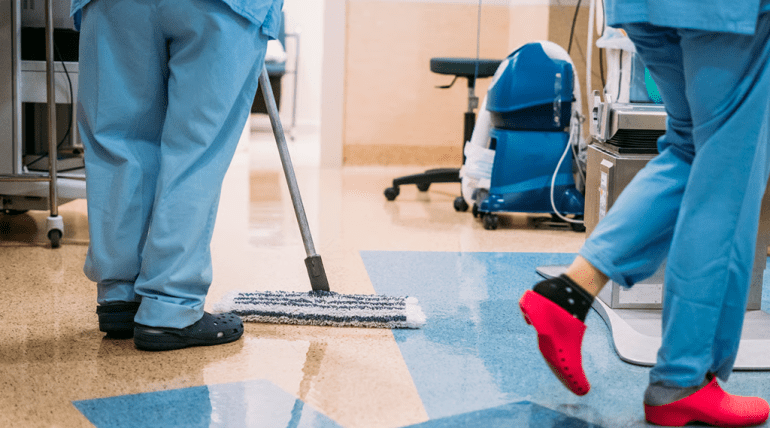
Choosing the right healthcare facility flooring is one of the most critical decisions a hospital administrator or facility manager will make. The wrong choice can compromise patient safety, create infection control failures, and generate significant unexpected costs. At JDV Safety Flooring, we’ve worked with healthcare facilities for over 25 years — and we’ve seen the same costly mistakes made again and again. Here’s what to avoid, and what to do instead.
Mistake #1: Choosing Aesthetics Over Safety in Healthcare Flooring
Beautiful flooring that becomes a slip hazard when wet is a liability, not an asset. In healthcare environments, wet floors are unavoidable — from patient bathrooms and treatment areas to corridors near sinks and nursing stations. Healthcare facility flooring must maintain its slip resistance under wet conditions throughout its entire service life. JDV Safety Flooring’s Matte Flooring line delivers a clean, professional aesthetic without sacrificing the safety performance that healthcare environments demand.
Mistake #2: Using Porous Flooring Materials in Clinical Areas
Porous flooring traps bacteria, viruses, and pathogens — a critical infection control failure in any healthcare setting. Hospital and clinic flooring must feature a non-porous, sealed surface that resists microbial colonization and can be thoroughly sanitized with the disinfectants used in clinical environments. This is especially important in operating rooms, patient wards, procedure rooms, and any area where bodily fluids may be present. Always verify that your healthcare facility flooring meets infection control standards.
Mistake #3: Underestimating the Importance of Acoustic Performance
Patient recovery is directly linked to quality of sleep and reduced stress. Hard, reflective floor surfaces amplify footstep noise and equipment movement, creating disruptive environments in patient care areas. Modern commercial healthcare flooring solutions offer significant acoustic benefits, absorbing sound and contributing to quieter, more healing-supportive environments. Noise reduction should be a specification requirement for patient room corridors and recovery areas.
Mistake #4: Ignoring Total Cost of Ownership
Many healthcare facility managers focus on upfront flooring costs while underestimating the long-term expense of maintenance, repairs, and replacement. Some flooring options that appear cost-effective initially require intensive stripping, waxing, and recoating to maintain safety and hygiene standards. Over a 10–15 year lifecycle, these maintenance costs can far exceed the initial purchase price. JDV Safety Flooring products are engineered for low-maintenance performance, delivering superior total cost of ownership for healthcare facilities.
Mistake #5: Failing to Account for Heavy Medical Equipment
Hospital beds, wheelchairs, surgical carts, stretchers, and imaging equipment place enormous compressive and rolling loads on flooring systems. Flooring that isn’t specified for these load ratings will crack, buckle, or delaminate prematurely — creating new safety hazards and unplanned replacement costs. When specifying healthcare facility flooring, always verify that products are rated for the equipment loads specific to your facility. JDV Safety Flooring can help you identify the right specification for every area of your building.